

HUAYUAN places structural safety at the center of mobile stage and roadshow vehicle project. From concept development to manufacturing and testing, engineering reliability is considered throughout the entire design process.
Whether supporting lighting trusses, line array audio systems, hydraulic support legs, or platform structures, each component is designed to work as part of a complete load-bearing system rather than as an isolated assembly.
Engineering decisions are supported by structural analysis, load calculations, and practical testing. These processes help improve structural strength, operating stability, and performance under demanding working conditions.
Before delivery, every mobile stage undergoes multiple inspections and verification procedures. This helps ensure reliable structural performance across different environments, operating frequencies, and project applications.
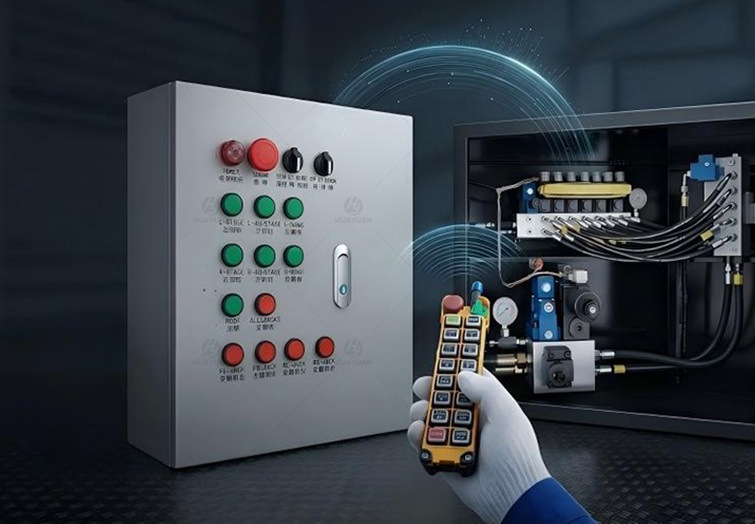
Key movements must operate steadily. Abnormal conditions must be controllable in time. Full equipment verification is also required before delivery.
HUAYUAN mobile stages mainly use hydraulic systems to complete key actions such as roof lifting, wing panel unfolding, support leg leveling, and complete vehicle deployment and retraction.
At critical support and lifting positions, hydraulic locks are installed. These work together with balance valves and pressure-holding designs to reduce the risk of abnormal lowering or movement instability.
The equipment supports both wireless remote control and button control. It is also equipped with an emergency stop function. Each support leg can be adjusted independently for leveling, and the system includes motion limit protection for easier on-site operation and status control.
Before delivery, each complete unit is tested through deployment, retraction, and hydraulic linkage checks. These tests confirm the stability, coordination, and overall condition of key movements.
For mobile stage equipment that requires frequent transport and on-site deployment, this type of hydraulic safety control is an important foundation for complete equipment safety.
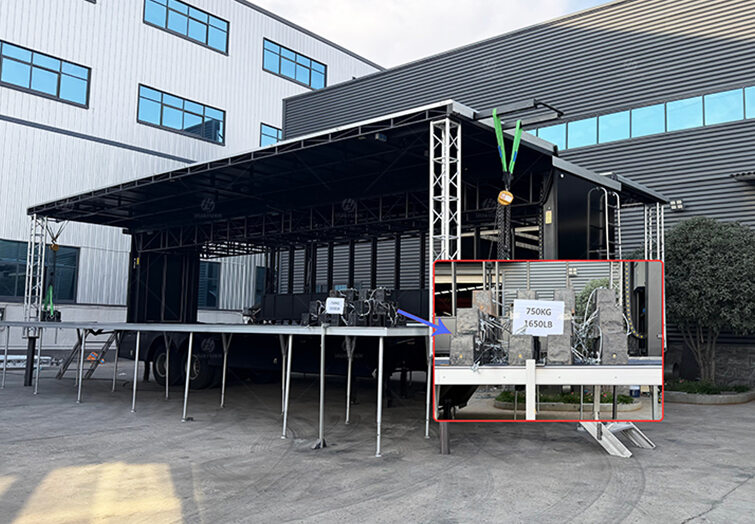
Safety is not a single number. It is a structural basis that can be implemented, verified, and used in real conditions.
The stage deck is composed of a steel frame and stage panels. When the equipment is fully deployed, the support system is in position, and the structural locking is completed, the allowable load at any position of the deck can reach 750 kg/m².
This load-bearing basis can meet the deck usage needs for personnel standing, regular equipment placement, and multiple event scenarios.
Deck load capacity is not only related to one value. It is also related to the actual force distribution and usage method.
During project execution, personnel movement, equipment layout, and localized concentrated loads can all affect the deck’s force condition. Therefore, in addition to regular use, if heavy equipment placement or special load arrangements are involved, the actual position and weight should still be confirmed in advance.
The relevant load data provides a clearer reference for on-site layout, equipment configuration, and later use evaluation.
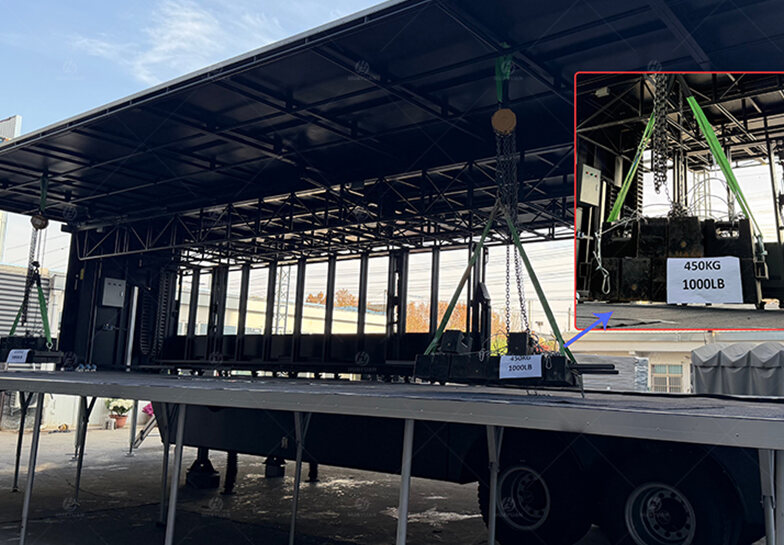
HUAYUAN prioritizes load-bearing safety in mobile stage roof design. The roof adopts a truss-type structure that serves as both stage coverage and a mounting platform for lighting systems and suspended equipment. For projects with standard lighting requirements, an additional hanging truss is often unnecessary. In the configuration shown here, a single rear suspension point can support up to 450 kg, providing flexibility for common suspension layouts. To verify load-bearing performance, the roof structure was tested with a total suspended load of 1000 kg. During testing, no visible deformation or structural abnormality was observed, providing practical reference data for suspension planning.
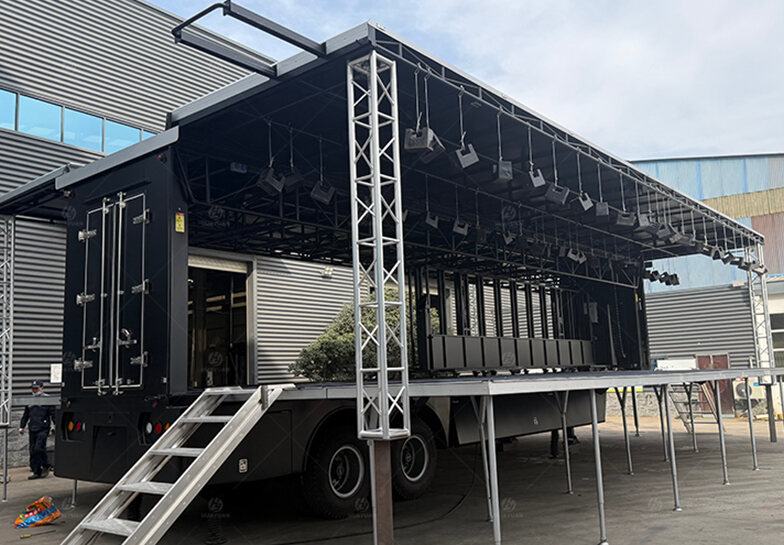
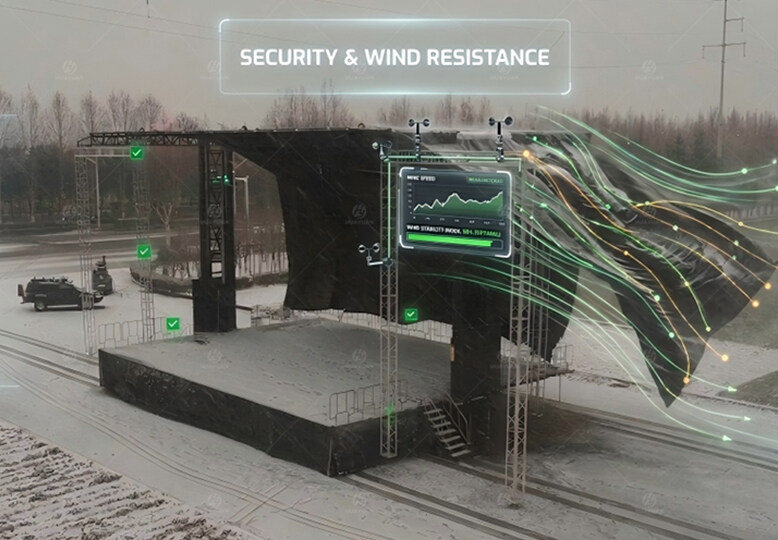
Wind load conditions for different models should be evaluated based on structure, configuration, and actual site conditions.
HUAYUAN also places strong emphasis on wind load safety when mobile stages are deployed.
For mobile stage equipment, wind load is not only related to the roof structure. It is also affected by deployed dimensions, configuration status, support conditions, fixing methods, and actual weather changes.
Because different models vary in roof area, structural height, and operating configuration, wind load conditions cannot be covered by one fixed set of values.
Therefore, HUAYUAN places more emphasis on completing deployment, support, and structural locking according to standard procedures. The actual operating limits should then be confirmed according to the specific model and project site conditions.
This evaluation method is closer to the real use requirements of mobile stages in actual projects, and it also supports better on-site safety management.
