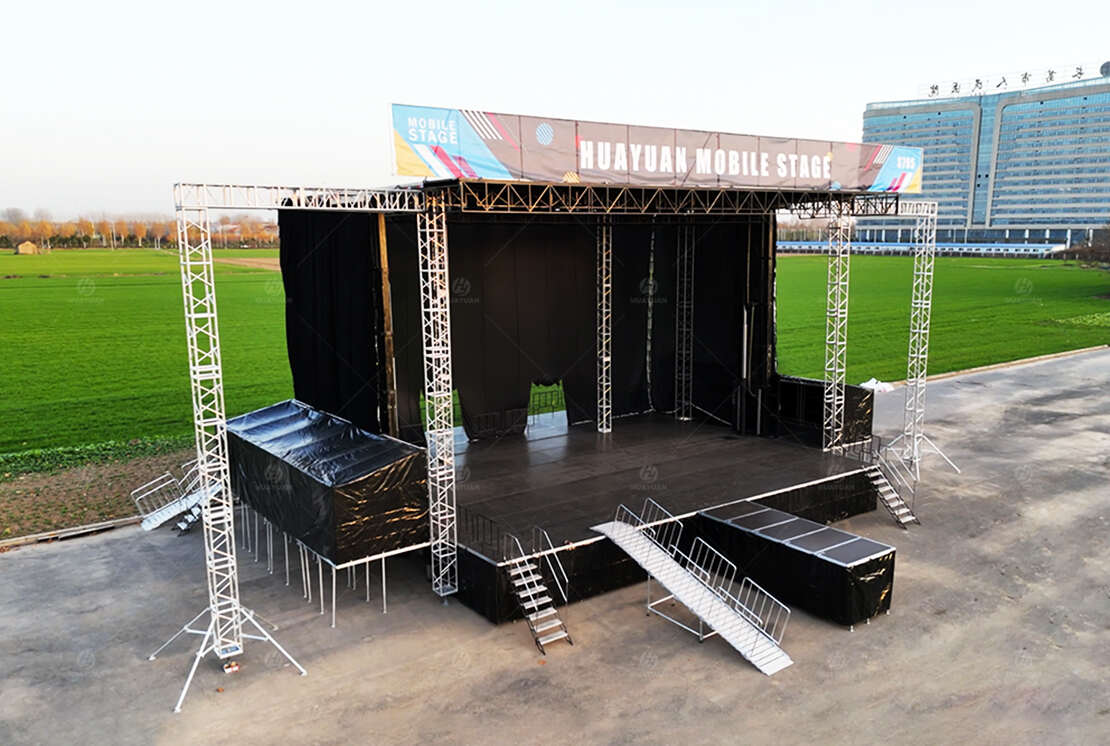
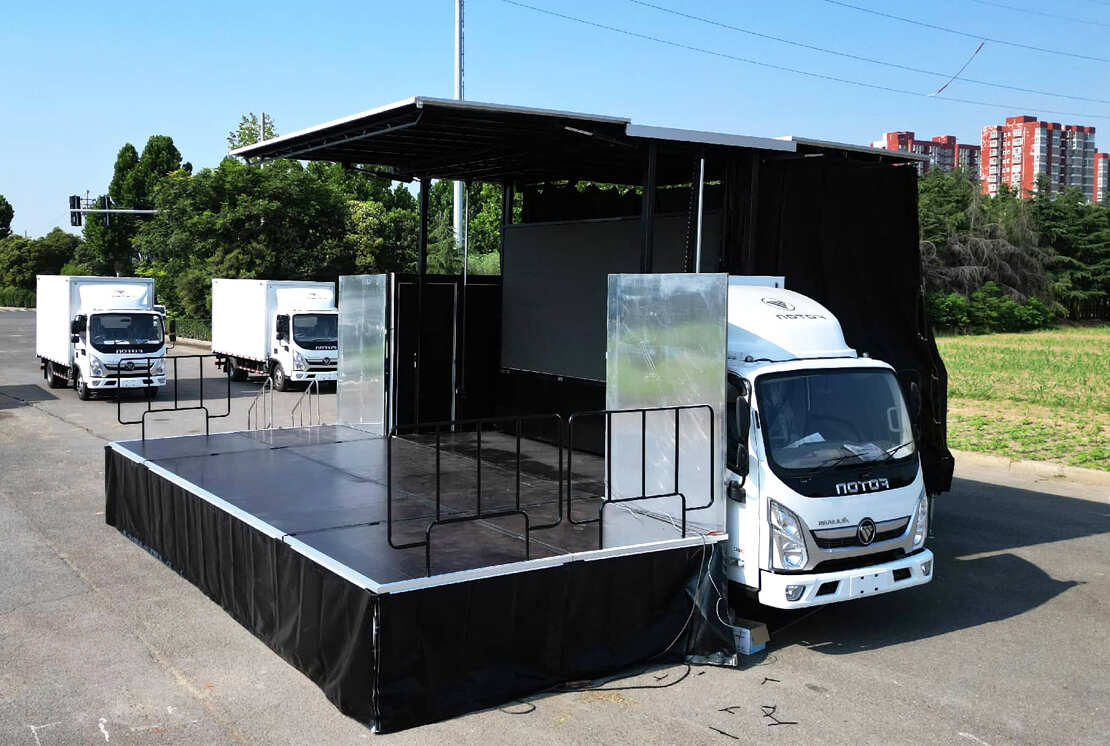
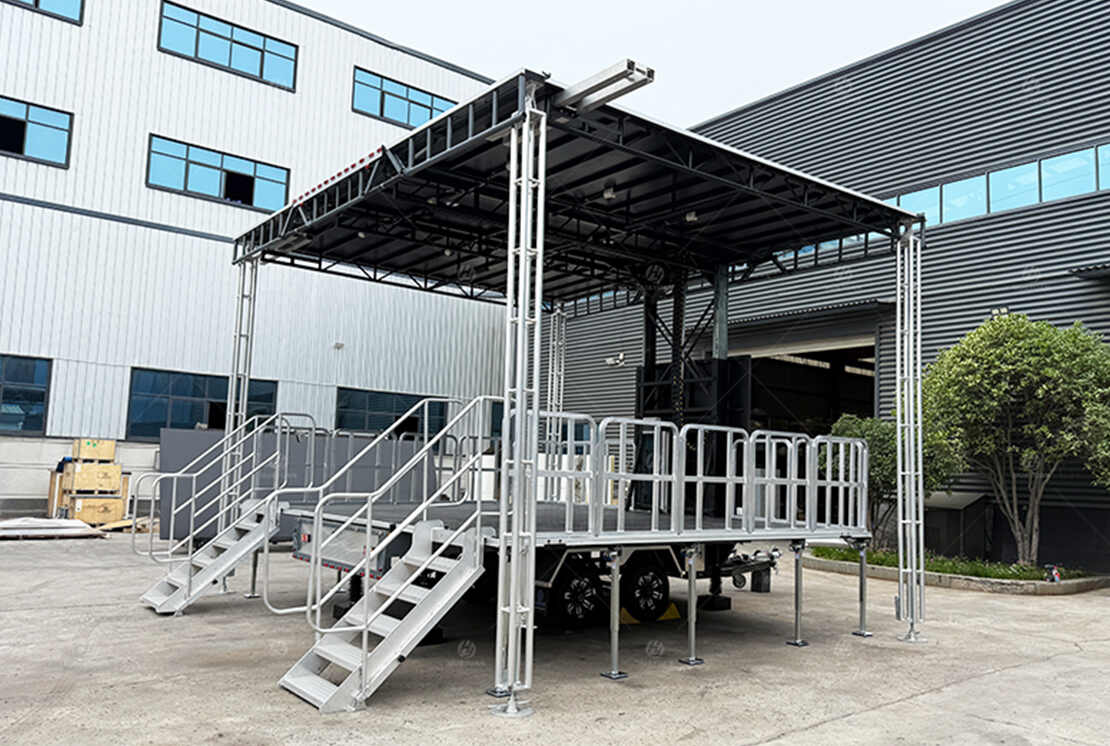
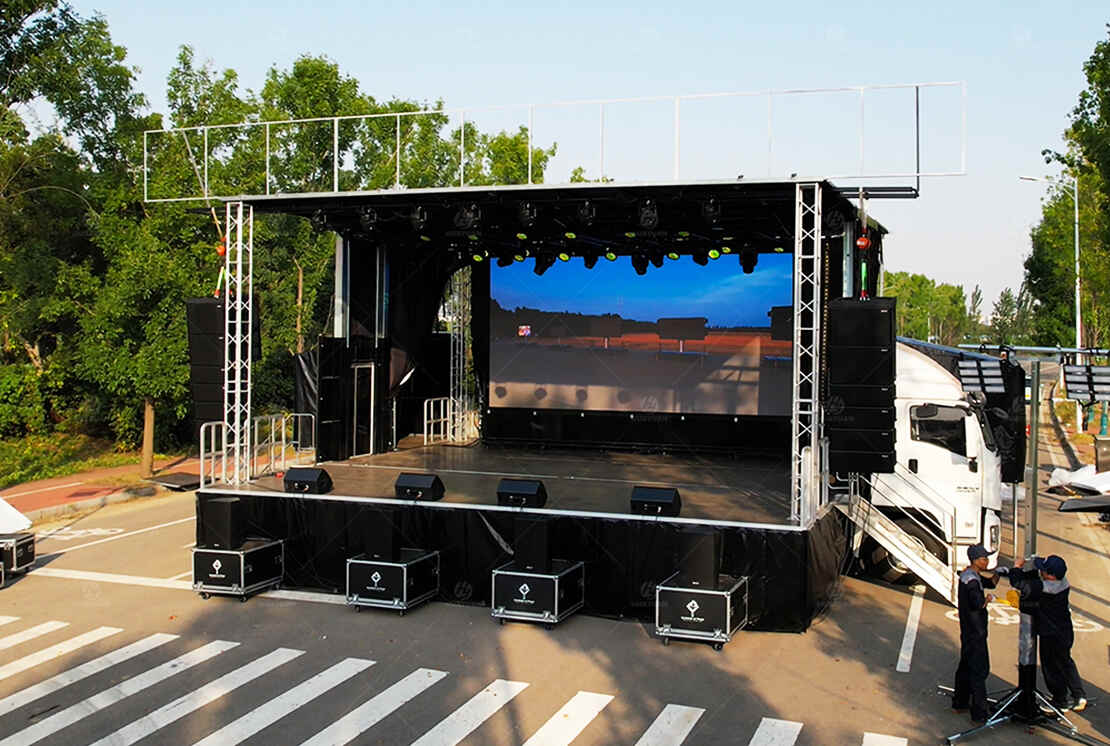
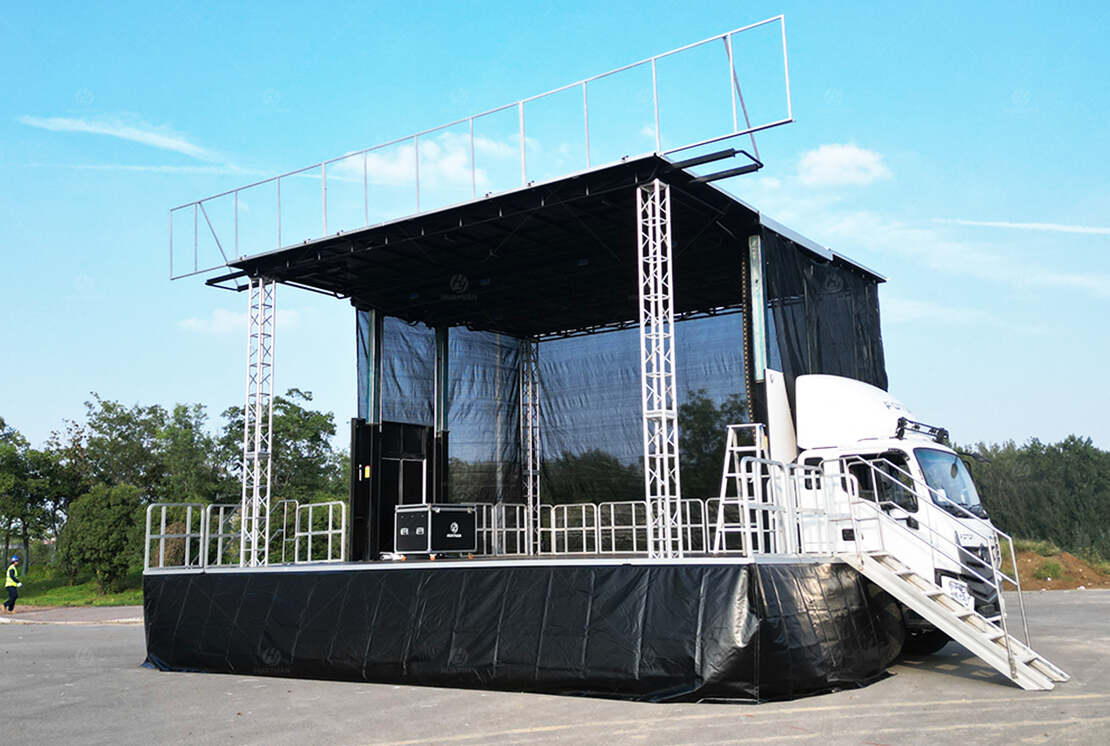
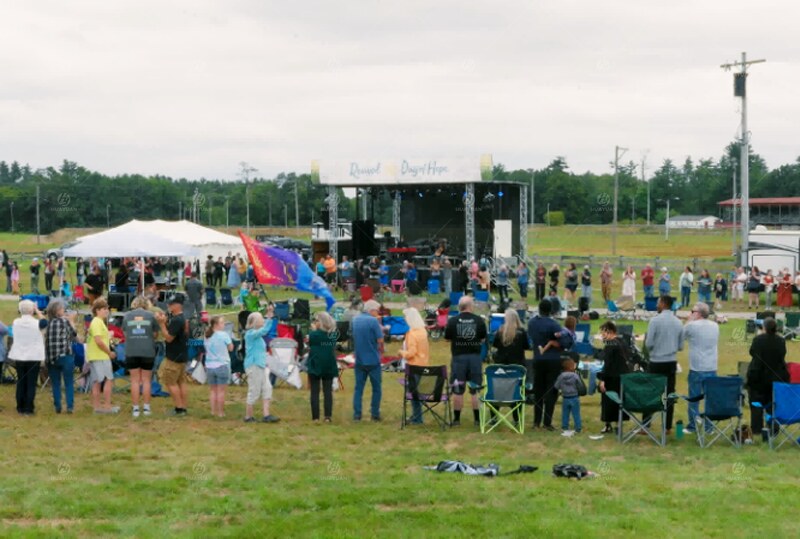
This event was held at the outdoor venue of Rochester Fairgrounds in Mississippi, USA. It was a community music and charity event, organized by a non-profit organization and local community service group.
The site was open, with fast-moving pedestrian traffic and frequent weather changes. The execution team focused on two key priorities: keeping the stage structure stable and keeping the working area safe and controllable.
The project used the ST315 Mobile Stage Trailer as the main stage platform.The site did not include an LED screen. Lighting was based on basic event lighting and stage lighting to meet outdoor visibility needs. The audio system used an outdoor sound reinforcement setup to cover the community audience area.
Power was supplied through temporary municipal power or temporary event power. Temporary power distribution was arranged on site, with the distribution point placed in a position that was easy to check and monitor.
Risk Point: Changing Weather + Open Venue
The schedule of an outdoor event can easily be interrupted by weather. Wind, rain, and temperature changes can all affect the site conditions. An open venue also means that people can get closer to the equipment area more easily.
Under these conditions, the focus of deployment is not simply speed. It is the ability to confirm the structural status and keep the working boundary under stable control.
After deployment, the ST315 can enter a stable structural state quickly. This allows the team to complete key inspections first, and then move forward with system equipment setup. Even when weather changes occur, the site workflow can remain more controlled.
Deployment Sequence: Stabilize the Structure First, Then Position the Systems
When the weather is unstable, the deployment sequence places more emphasis on confirmation before further setup.
After arrival, the site team confirmed the parking position and deployment boundary. The stage was then deployed by hydraulic remote control.
Before the structural locking points and support points were checked, the lighting and audio equipment were not moved into position. After the stage entered a stable state, the team continued with equipment placement, power-on inspection, and basic system testing.
This sequence handles key risks at an earlier stage and reduces the scope of temporary adjustment. It also makes the site easier to control when weather conditions change.
This project was usually deployed by 1–2 operators, with the stage opening process completed in about 35 minutes.
Power Supply and Cable Routing: Keeping the Site Easy to Inspect
In changing weather conditions, the key point of temporary power is not only connection. It must also remain easy to inspect at any time.
The site team placed the power distribution equipment in a position that was easy to monitor. Circuit labels were kept clear and visible.
Cable routes avoided the main pedestrian areas. Crossing points were secured and protected to reduce trip risks.
When signs of weather change appeared, the team increased the inspection frequency. The key checks included the status of the distribution box, cable fixing, and whether crossing points had been stepped on or loosened.
A stable stage structure and clear working boundaries made these inspections easier to carry out. They also helped the site remain organized during environmental changes.
On-site Inspection and Crowd Control
Before the event started, the team completed three checks in sequence:
Support points and locking points
Cable crossings and cable fixing
Distribution box status and load distribution
The working area and audience access area were separated on site. When weather conditions changed, the inspection frequency was increased.
Client Feedback
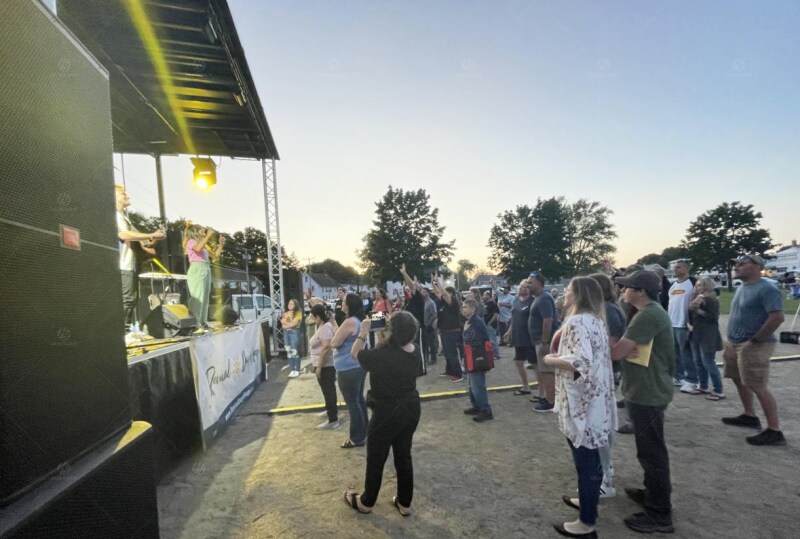
The stage gave us confidence to run the event safely, even with changing outdoor conditions.
Pre: ST315 Fixed Public Plaza Stage Project | San Antonio
Next: Manual Stage Deployment Within a Stadium Time Window | Chiscani (ST315S)