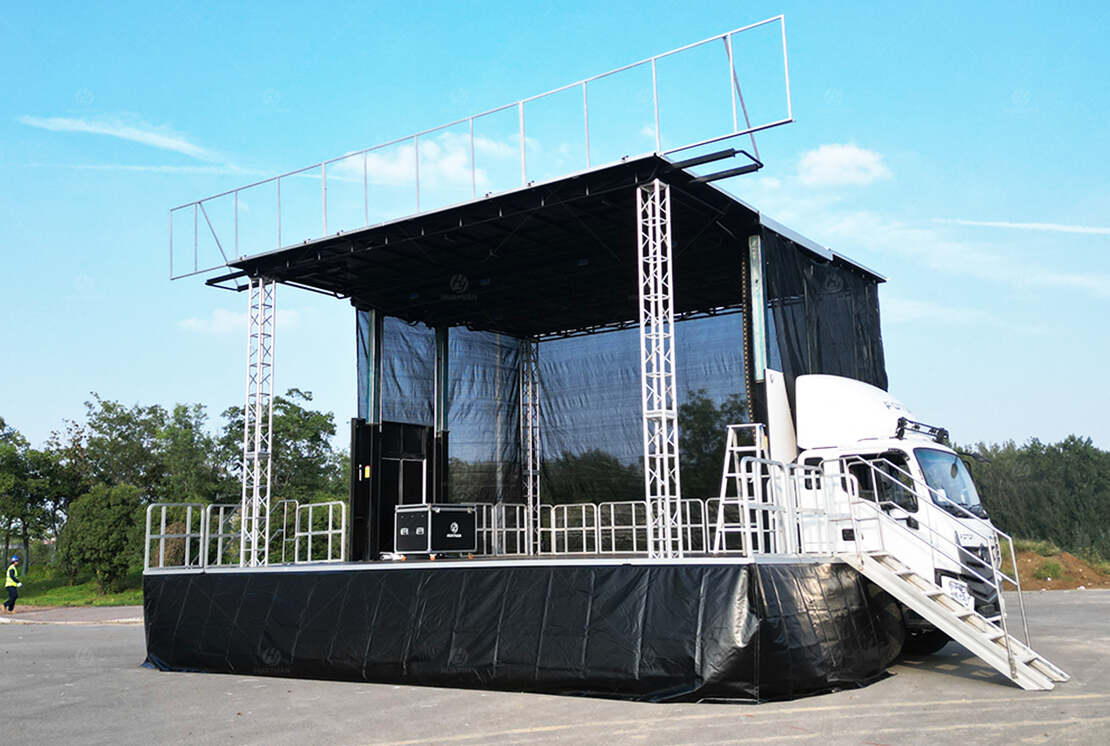
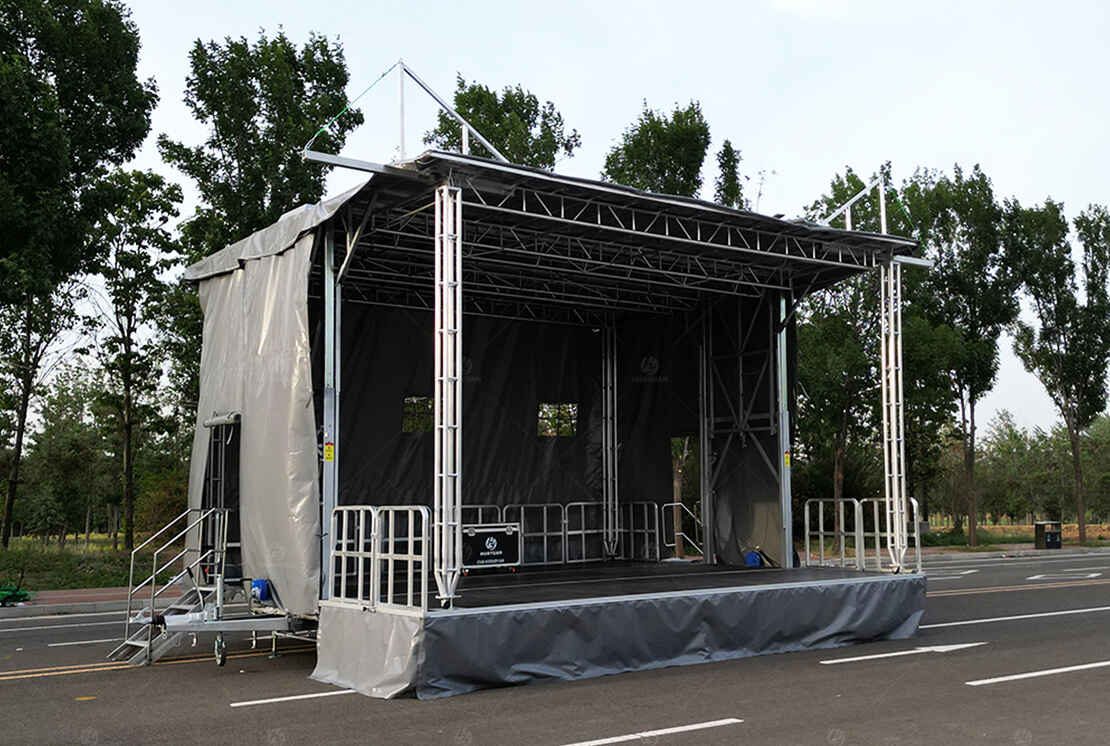
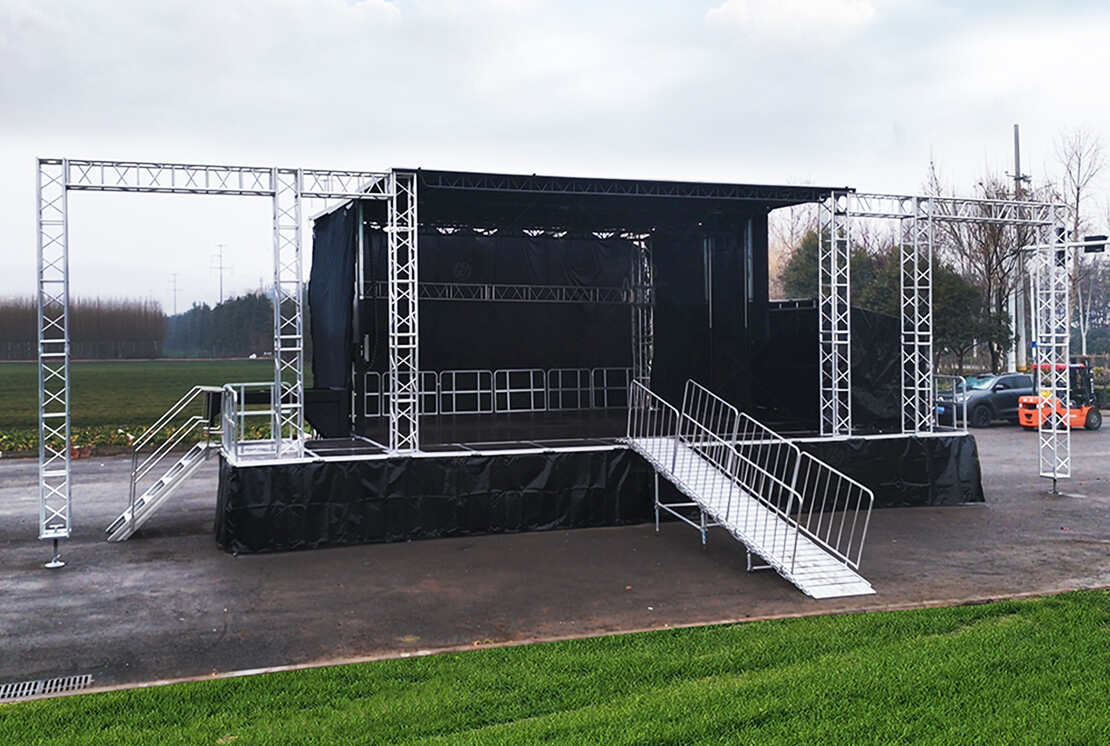
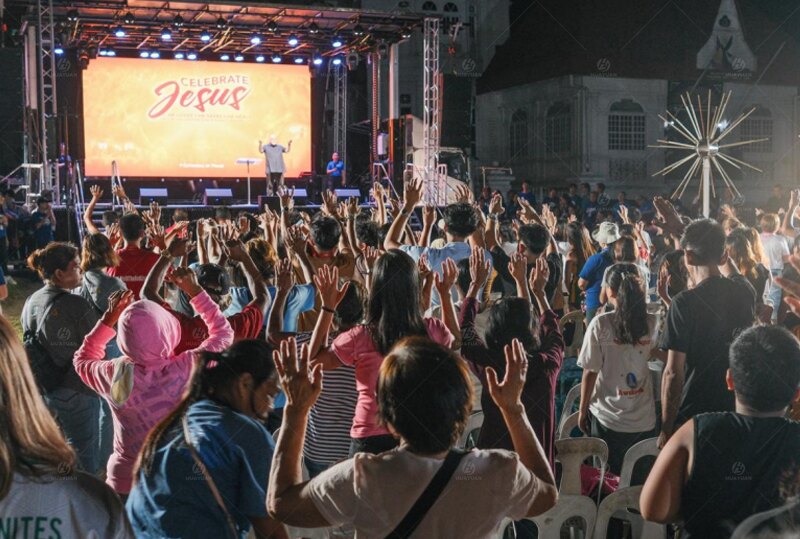
This project was located in San Pablo City, Laguna, Philippines. The event was an outdoor worship and gospel outreach program, organized by the religious organization and international church network COP Celebrate Jesus.For this type of event, the main pressure comes from scheduling. The execution team focused on the time required from arrival to ready-to-use status. The more stable this time window is, the easier it becomes to plan multi-location event routes.
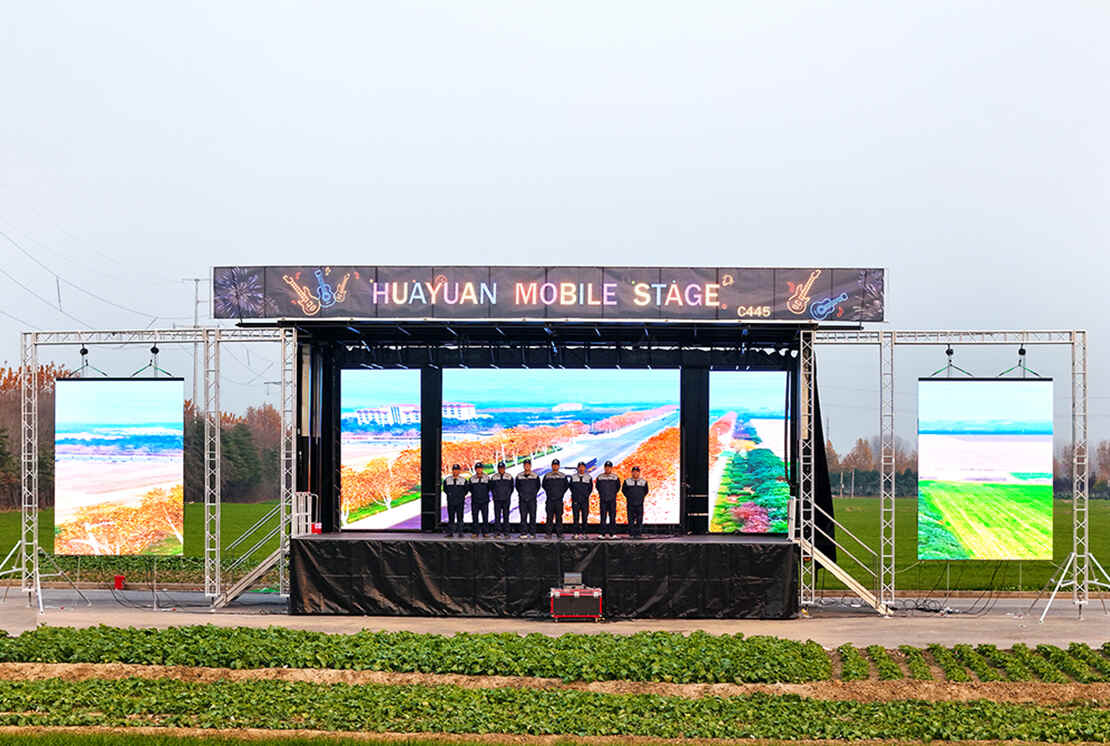
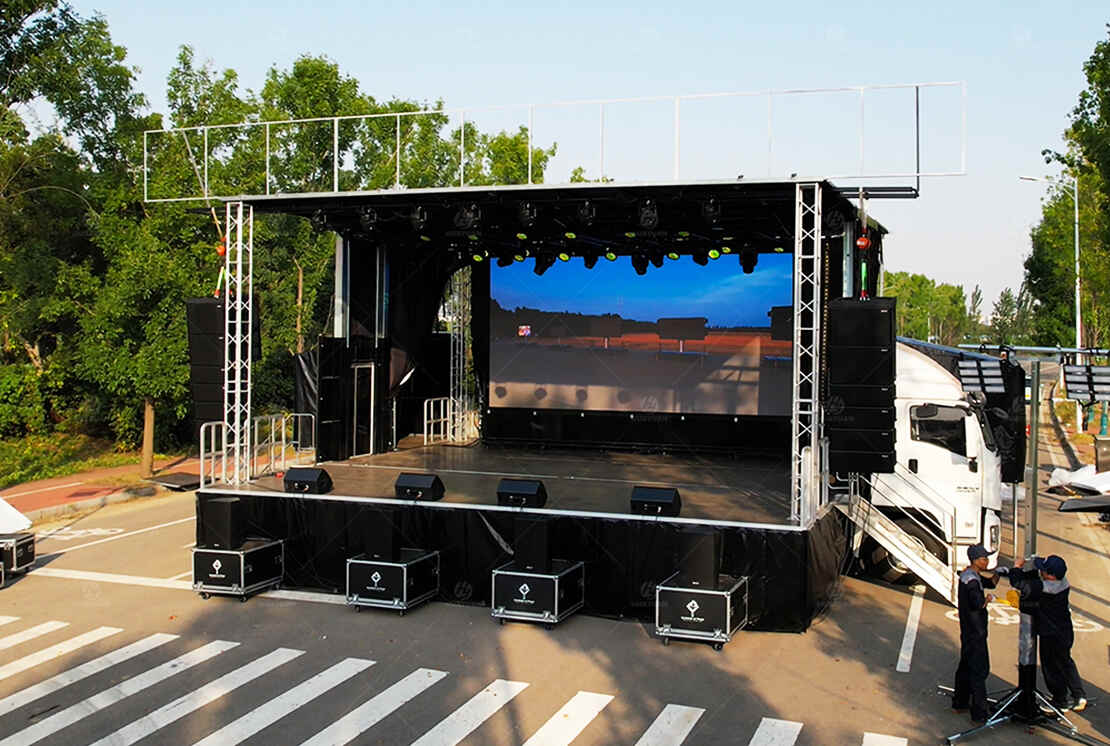
This project used the T315 Mobile Stage Truck. The stage was equipped with an LED screen for worship lyrics and event information display.The lighting system combined performance lighting with basic ambient lighting, suitable for night worship activities. The audio system used a medium-to-large outdoor sound reinforcement setup to cover both the grandstand and open audience areas.Power was supplied through grid power or temporary event power, with temporary distribution arranged according to on-site requirements.
On-site Deployment Rhythm
The team usually had only a short setup window, so the process was organized into four fixed steps.First, the truck was aligned with the planned position and the deployment boundary was confirmed. Second, the stage was deployed by hydraulic remote control. Third, the team checked the locking points and support status. Finally, the LED screen, lighting, and audio systems were positioned according to the preset layout, followed by power-on inspection and basic system testing.With this workflow, 3–4 operators could bring the equipment to ready-to-use status in about 45 minutes.
LED Information Display
The LED screen was mainly used for worship lyrics and event notices.The content was prepared in advance according to the program sequence, including opening content, lyric changes, and reminder messages. Before the event started, the team checked the screen brightness and readability.This reduced the need for repeated verbal reminders from the host and helped keep the event flow more stable.
Night Event System Setup
Night events depend more on lighting coverage and sound coverage boundaries.The team usually completed power distribution and power-on checks first, then moved into basic system testing.
Lighting was first adjusted to make the stage deck and access routes clearly visible, before adding ambient lighting.The audio system was checked according to the grandstand area and open audience area.The goal was direct: solve potential issues before the program started.
Multi-location Movement
This type of event often moves between different locations.For the execution team, the key concern was whether each setup could follow the same workflow every time. This helped prevent the schedule from being delayed by temporary on-site adjustments.
Client Feedback
The client feedback also pointed to this same value:
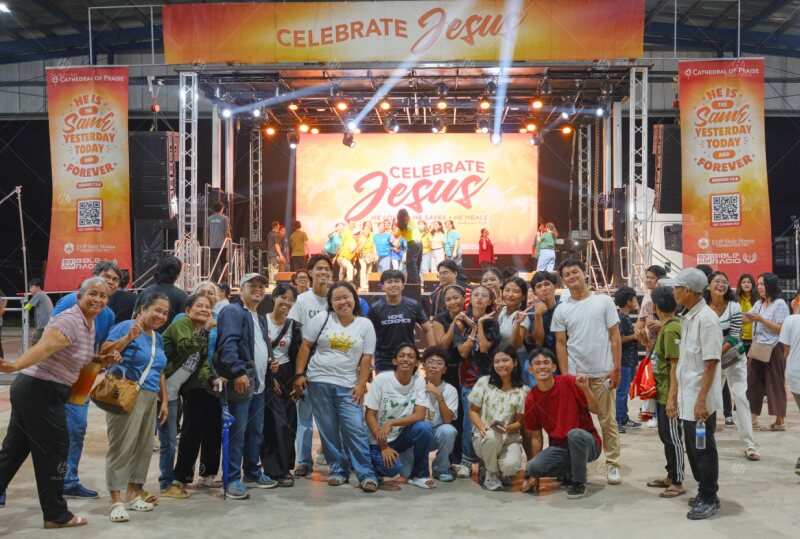
The truck-based stage made our event schedule easier to manage, especially when moving between locations.
Pre: Manual Stage Deployment Within a Stadium Time Window | Chiscani (ST315S)
Next: ST345S Mobile Stage Trailer | Large Performance System Deployment in Boca Raton, USA