

When evaluating the safety of a mobile stage, many people focus only on the stage structure itself. In reality, stability is influenced by multiple factors working together, including ground conditions, support deployment, equipment loading, weather, and routine inspection.
Even a professionally manufactured mobile stage can experience stability issues if it is operated on unsuitable ground, overloaded, or deployed incorrectly. Understanding these factors helps operators reduce risks, improve reliability, and ensure safe operation throughout an event.
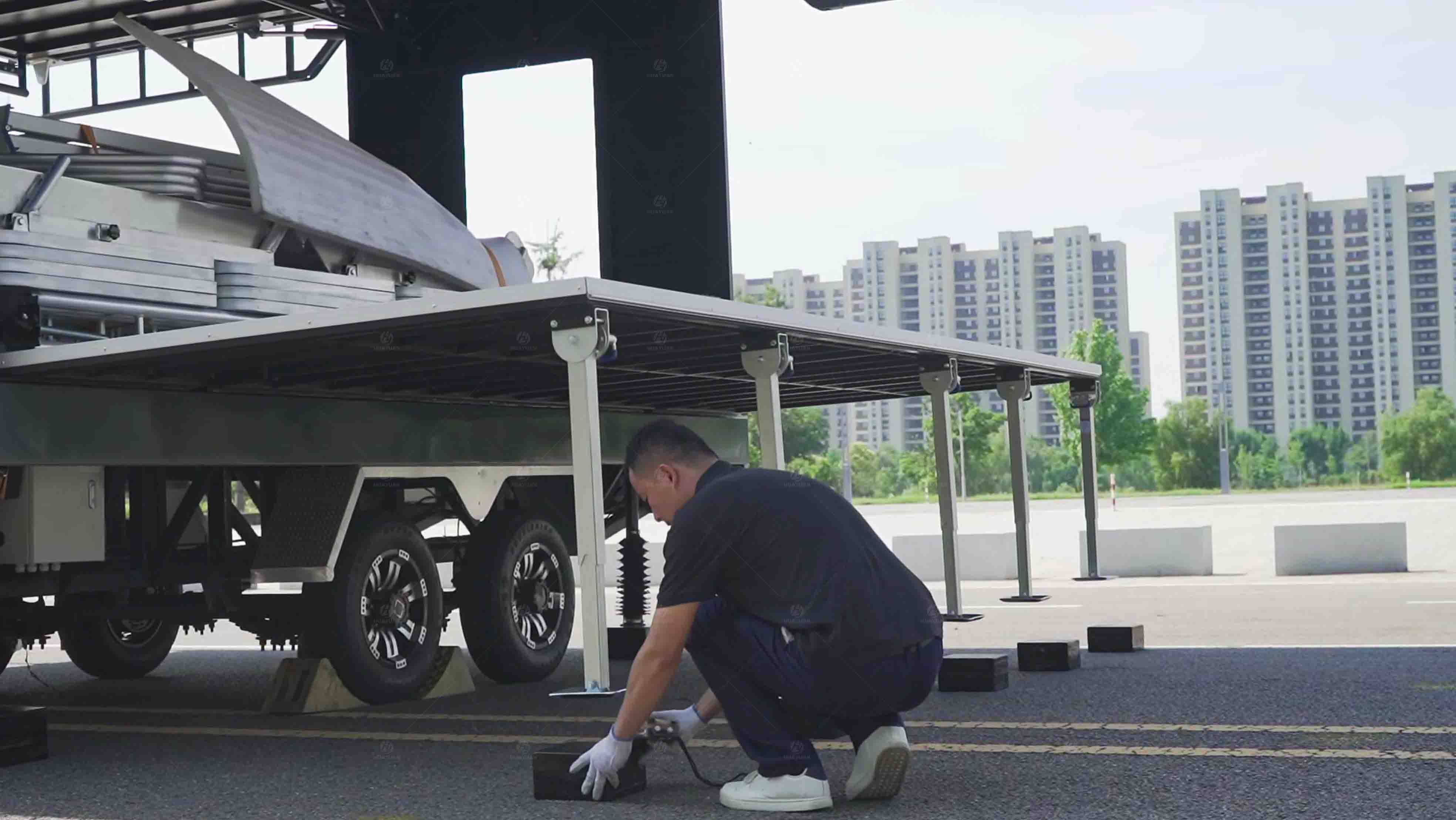
Every mobile stage relies on the ground to safely transfer its weight and operational loads.
Before deployment, the installation area should be inspected for sufficient bearing capacity, overall flatness, and potential soft spots. Asphalt softened by high temperatures, recently backfilled soil, wet grass, or uneven surfaces may not provide adequate support for the outriggers.
If the supporting surface cannot evenly distribute the load, one or more outriggers may settle during operation, causing the entire structure to lose its level position.
Whenever necessary, appropriate support pads should be used to increase the contact area and improve load distribution.
 Outriggers are designed to stabilize the trailer and transfer loads safely to the ground. Their effectiveness depends not only on their structural strength but also on correct deployment.
Each outrigger should make full contact with the supporting surface and share the load evenly. Operators should verify that the stage has been properly leveled before continuing with the deployment process.
Skipping the leveling procedure or allowing one outrigger to carry significantly more load than the others may reduce the overall stability of the stage.
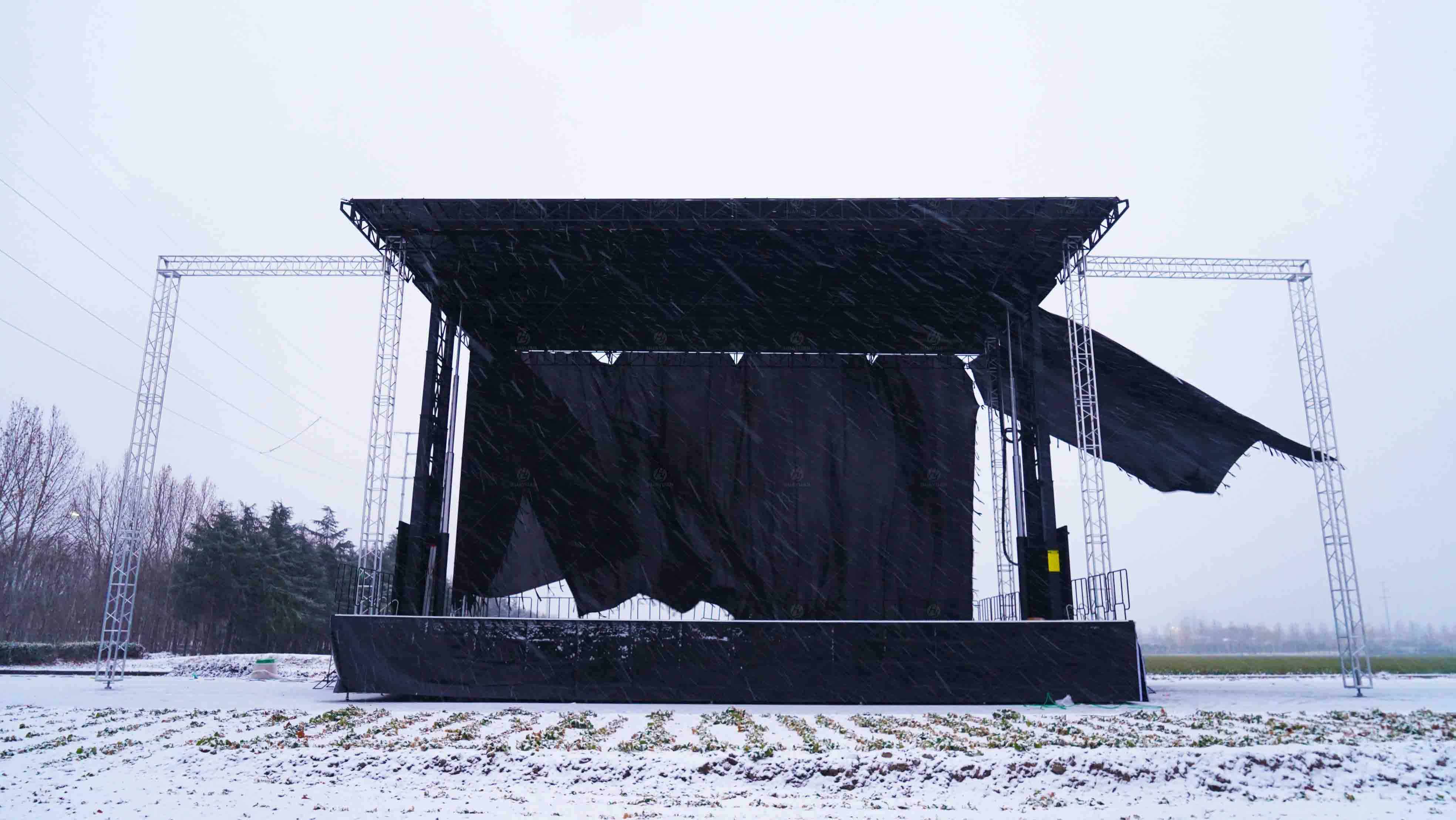
Wind is one of the most important environmental factors affecting outdoor mobile stages.
The stage itself is only part of the overall wind load. LED screens, banners, lighting fixtures, decorative elements, and temporary coverings can all increase the surface area exposed to the wind.
Weather conditions should be evaluated before and throughout the event. If wind speeds approach the manufacturer's specified operating limits, stage operations should be suspended and appropriate safety procedures followed.
Ignoring changing weather conditions can significantly increase structural loads and operational risks.
Lighting systems, audio equipment, LED displays, and other production equipment should always be installed according to the stage's designed load capacities.
Uneven weight distribution or concentrated loads may create additional stress on specific structural members, even when the total weight remains within the allowable limit.
Following the manufacturer's load recommendations helps maintain structural balance and supports long-term equipment reliability.
Many stability issues do not develop suddenly. They often begin as small problems that are overlooked during daily operation.
Operators should routinely inspect hydraulic components, locking mechanisms, structural connections, support systems, and electrical controls before every deployment.
Loose fasteners, hydraulic leaks, damaged hoses, or worn locking devices should be repaired before the equipment is placed into service.
A consistent inspection routine improves equipment reliability while reducing unexpected downtime during events.
A well-designed mobile stage provides the structural foundation for safe operation, but long-term stability also depends on correct deployment, routine maintenance, environmental awareness, and responsible operation.
By understanding how ground conditions, outriggers, wind loads, equipment distribution, and regular inspections work together, operators can reduce operational risks and help ensure safe, reliable performance at every event.
Pre: No Information
Next: No Information
